
2nd Monitoring Visit in Gran Canaria of the LIFE Phoenix Project (3–5 February 2026)
13/02/2026
The LIFE Phoenix Project – Reforestation and Improvement of Priority Habitat 9370* Phoenix Palm Groves – was approved in the 2022 call for proposals for the European Union's LIFE Programme, within the Nature and Biodiversity sub-programme. The project is led by the Council of Gran Canaria and coordinated by GESPLAN, within an international consortium made up of nine partners from Spain and Greece.
LIFE Phoenix brings together different public and private entities, scientific institutions and non-governmental organisations with the aim of advancing knowledge, methodologies and procedures aimed at improving the conservation status of Europe's endemic palm groves, consisting of the Canary Island palm in the Canary Islands and the Cretan palm in Greece. These plant formations are included among the priority habitats to be conserved by the European Union, under the designation of habitat 9370* ‘Phoenix palm groves’.
Both species and the habitat they form face similar conservation problems in the two regions. The main common threats are due to the effects of climate change, pests and invasive plants. Other problems detected are related to human activities specific to each territory: in Gran Canaria, hybridisation with the date palm due to past bad practices; in Crete, overgrazing and tourist pressure.
The project's areas of action in Gran Canaria include two palm groves in the Güigüí Special Area of Conservation (SAC) – Guguy Grande and Cuermeja – and another two in the Fataga SAC – Los Aserraderos and Caserones.
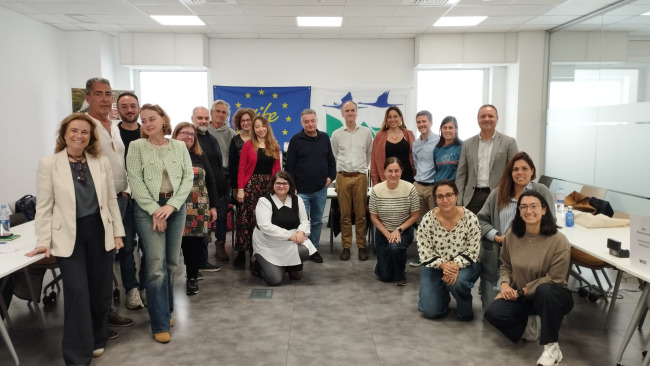
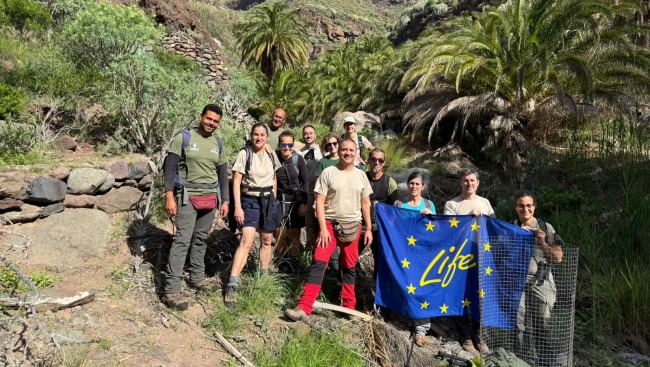
Now that the project has reached its halfway point, LIFE Phoenix has undertaken a week of technical monitoring in Gran Canaria, together with representatives from the European Commission and the other partners that make up its international consortium. The planned agenda included a field review of the actions carried out so far in the target palm groves on 3 and 4 February, as well as a technical and financial follow-up meeting on 5 February.
So far, all conservation actions have begun in both regions and are progressing at different levels of implementation. In Gran Canaria, progress has been made in preparing the land, controlling invasive vegetation and pest control (specifically Diocaladra frumenti) within the areas of action, as well as in cross-cutting governance and communication actions. Since January, the first repopulation tasks with endemic species have also begun in the interior of the Guguy Grande ravine.
The LIFE Phoenix project will run for 60 months, from July 2023 to June 2028. Its total budget is €3,901,577.38 and it is 75% funded by the European Commission.